English

Views: 0 Author: Site Editor Publish Time: 2026-10-14 Origin: Site
Homeowners and business operators worldwide are actively switching to renewable energy. The goal is straightforward. Slash monthly utility expenses while gaining long-term energy independence. However, the actual transition frequently bogs down in technical jargon and complex hardware configurations. Picture yourself sitting at the kitchen table staring at multiple contractor quotes. You feel completely overwhelmed by the varying equipment lists. Transitioning to solar power is a smart financial move. Yet, navigating the technical options without a clear map remains a daunting experience.
Choosing the incorrect setup might leave you in the dark during an unexpected grid outage. Conversely, you could overspend on heavy-duty equipment your property simply does not require. In this guide, we cut through the confusion and clarify the fundamental differences between system architectures. You will discover exactly how each configuration functions. By the end, you will possess a clear framework to make a cost-effective, reliable choice tailored to your exact energy goals.
Grid-Tied Systems: Generally the most cost-effective option for drastically reducing utility bills. However, they offer absolutely no backup power during neighborhood blackouts.
Off-Grid Systems: Providing complete energy independence with zero reliance on traditional utility networks. These setups require robust battery storage and command a significantly higher initial financial investment.
Hybrid Systems: Often considered the optimal middle ground. They combine a standard grid connection with battery backup, supplying reliable power during blackouts while maximizing grid incentives.
Decision Factors: Your final choice should be dictated by your available budget, the historical stability of your local grid, and your long-term lifestyle goals.
Core Components: Utilizing high-efficiency 500W solar panels, intelligent inverters, and durable LiFePO4 storage batteries remains crucial for maximizing long-term return on investment.
Recent market analyses reveal a significant shift in residential and commercial solar adoption. Historically, straightforward grid-tied systems dominated the market due to their low upfront costs and rapid payback periods. Today, increasing grid instability and extreme weather events are driving massive consumer demand for energy resilience. Industry data shows that battery-integrated systems are currently outpacing traditional setups in year-over-year growth.
Furthermore, consumers no longer view solar merely as a utility bill offset. They view it as critical home infrastructure. This pivot is accelerated by the rapidly falling costs of advanced lithium storage and intelligent load-management technology. Consequently, autonomous and semi-autonomous power solutions are becoming more financially accessible to the average homeowner than ever before.
Directly tethered to your local utility network, a grid-tied solar system is currently the most prevalent configuration in urban and suburban environments. Because this architecture relies on the utility grid to dynamically balance energy supply and demand, it operates entirely without the need for an on-site battery storage bank. It effectively uses the public grid as a massive virtual battery.
Financially, this architecture relies on a billing mechanism known as net metering. Think of a bright summer afternoon. Your rooftop array generates surplus power. This excess energy flows directly into the utility grid. In exchange, the utility company credits your account. Later that evening, when the sun sets, you draw electricity from the grid. You utilize those accrued daytime credits to offset the nighttime cost.
Lowest Upfront Cost: Eliminating expensive battery banks keeps initial installation expenses to an absolute minimum.
Shorter Payback Period: Lower initial costs combined with aggressive net metering benefits yield a remarkably fast financial return.
Minimal Maintenance: Fewer moving parts mean there is significantly less hardware to monitor or replace over the lifespan of the array.
Vulnerable to Blackouts: For strict safety compliance, these inverters feature an anti-islanding mechanism. If the neighborhood grid goes down, your system automatically shuts off. This prevents live electricity from endangering utility workers making repairs.
In stark contrast to grid-connected setups, an off-grid solar system functions as a completely standalone power plant for your property. It is physically severed from the traditional utility grid. To keep the lights on and the refrigerator running seamlessly, this configuration must independently generate and store every single watt of electricity required by the household.
Because you lack a utility safety net during the night or throughout prolonged stretches of overcast weather, robust energy storage is non-negotiable. A properly sized off-grid setup for a modern homestead typically features an 8kW inverter paired with a 24kWh battery storage bank and an array of high-efficiency 500W solar panels. This specific sizing ensures heavy inductive loads, like well pumps or HVAC units, start without tripping the system. Many off-grid setups also incorporate a backup fuel generator to bridge the gap during extreme winter weather.
Complete Energy Independence: Users are entirely insulated from utility grid failures, rolling blackouts, and unpredictable electricity rate hikes.
Remote Viability: Trenching utility lines miles through rugged terrain is often prohibitively expensive. An independent setup becomes the only practical solution for remote cabins or agricultural facilities.
Highest Initial Cost: The mandatory inclusion of large-capacity batteries and specialized heavy-duty inverters dramatically increases the upfront capital required.
Strict Energy Management: Users must actively monitor their daily consumption. Running heavy loads simultaneously on a cloudy day requires careful lifestyle adjustments.
A hybrid solar power system effectively bridges the gap between the limitations of grid-tied designs and the sheer expense of off-grid configurations. It maintains a stable connection to the local utility grid while simultaneously incorporating a dedicated on-site battery backup system. This dual-natured approach grants the property the ability to store excess solar energy locally while keeping the traditional power grid available as a secondary safety net.
The defining feature of a hybrid setup is its programmable flexibility. The system prioritizes drawing energy from your rooftop panels first. If production exceeds your immediate household demand, the surplus is routed to charge your battery bank. Specifically, modern hybrid inverters handle complex power routing with millisecond transfer switches. Only when the battery reaches full capacity will the system export surplus energy to the grid. Conversely, if your home requires a massive surge of power, the system seamlessly pulls the deficit from the utility grid without interruption.
Reliable Backup Power: Unlike standard setups, hybrid systems isolate themselves during a blackout. They continue supplying critical loads directly from your battery reserves.
Protection Against Peak Rates: Users can program their storage units to discharge during expensive peak Time-of-Use utility hours, cleverly avoiding premium grid charges.
Increased Complexity: The addition of batteries and specialized hybrid inverters makes the installation slightly more technically complex and more expensive than a basic grid-tied setup.
To help facilitate a clear decision, it is vital to objectively compare the foundational differences between these technologies. The matrix below outlines how the two primary extremes alongside the hybrid middle ground handle critical operational factors.
System Feature | Grid-Tied | Off-Grid | Hybrid |
|---|---|---|---|
Upfront Cost | Lowest | Highest | Moderate to High |
Grid Connection | Yes | No | Yes |
Power Outage Behavior | Shuts down completely | Continues running | Continues running |
Battery Requirement | None required | Mandatory High Capacity | Mandatory Moderate Capacity |
Energy Independence | Partial Financial Only | Complete | High |
When analyzing these core differences, the central trade-off boils down to your initial budget versus your desire for energy security. Investing in a streamlined grid-tied system prioritizes rapid financial returns but sacrifices operational resilience. Off-grid setups offer total autonomy but demand a massive initial capital outlay. The distinct gap between these two extremes is precisely why hybrid systems were engineered.
The specific system architecture you choose directly dictates the hardware components required for a safe, code-compliant installation. While some equipment is universal, other components are highly specialized based on grid interactivity.
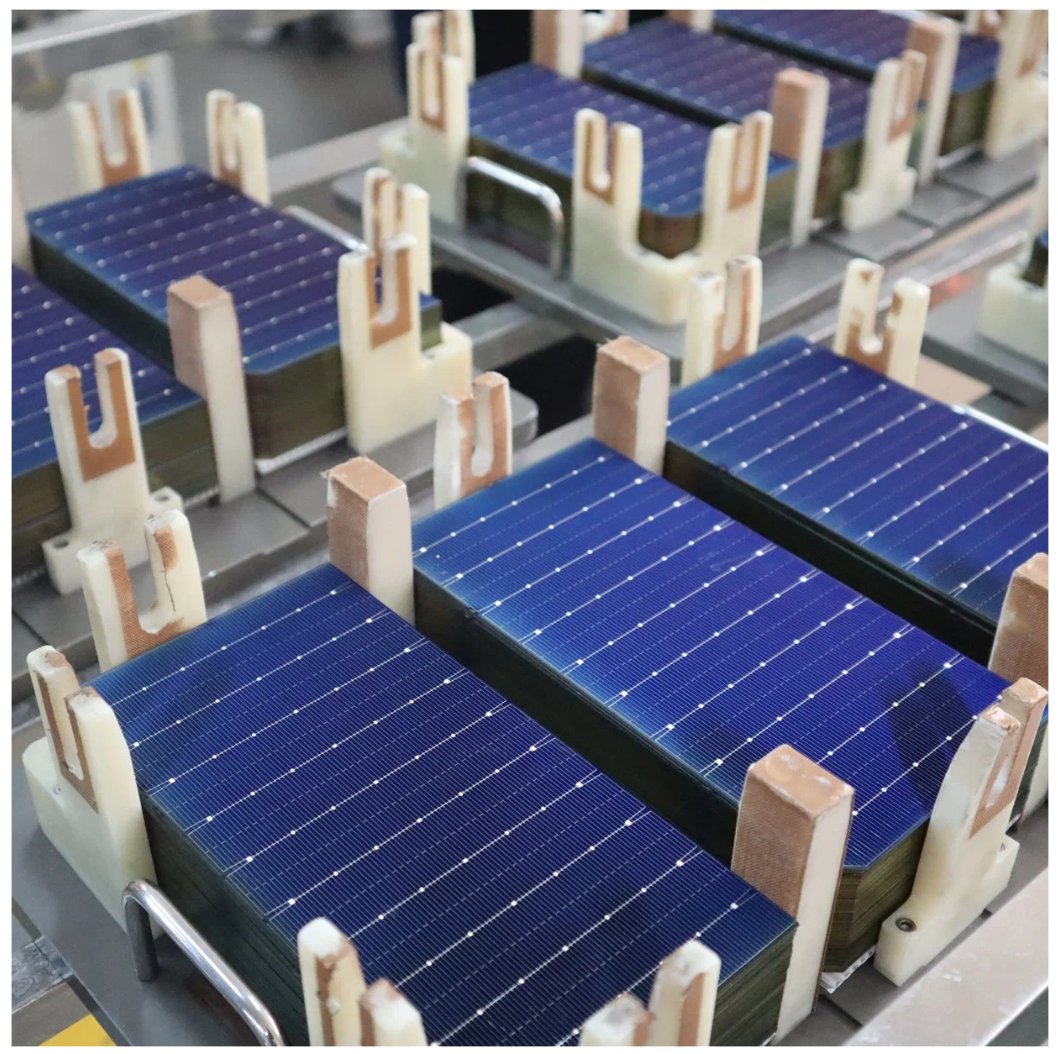
Regardless of the path you choose, high-efficiency solar panels form the bedrock of your setup. They capture raw sunlight and convert it into direct current electricity. Today, 500W monocrystalline panels are universally recommended across all configurations due to their superior efficiency metrics and excellent space-saving characteristics.
The inverter acts as the central nervous system of your array. It converts direct current electricity from the panels into the alternating current electricity used by your home. Grid-tied inverters are designed to sync perfectly with the utility grid frequency. In contrast, off-grid inverters are heavy-duty units built to handle massive startup surges without grid support. Hybrid inverters are the most advanced, expertly managing multiple inputs and outputs simultaneously.
Batteries are the critical dividing line that separates standard arrays from resilient configurations. Selecting the right battery chemistry is vital for system longevity. Lithium Iron Phosphate LiFePO4 batteries have rapidly become the industry standard. They offer a longer cycle life, deeper discharge capabilities, and superior thermal stability when compared to antiquated lead-acid technologies.
Selecting the correct infrastructure is not a guessing game. It requires a pragmatic assessment of your physical environment and personal consumption habits. Stop looking at generic formulas and start calculating your actual site conditions.
Do not simply ask how much power you use. Ask what appliances must stay on during an emergency. If your critical load only includes a refrigerator, Wi-Fi router, and a few LED lights, a moderately sized hybrid system is perfect. If you need to power multiple air conditioners and heavy agricultural equipment entirely off the grid, you must scale up to a robust 24kWh or larger storage solution.
Your next consideration must be the historical reliability of your local utility grid. Do you live in a coastal area prone to hurricanes? If your neighborhood suffers from frequent blackouts, a standard grid-tied system will leave you frustrated. Reliability must be your primary concern, pointing you directly toward a hybrid configuration.
The physical location of your property plays a massive role in system selection. Imagine building a new home situated several miles away from the nearest utility pole. The utility company may quote you tens of thousands of dollars simply to trench the connection lines. In these remote scenarios, investing heavily in a robust off-grid system actually becomes the more economical choice.
Ultimately, there is no single solution when transitioning to renewable energy. Grid-tied systems offer the most budget-friendly path to monthly savings. Off-grid systems provide an uncompromising level of complete energy independence. Meanwhile, hybrid systems deliver a highly adaptable middle ground, offering the security of a backup reserve without sacrificing grid benefits.
Are you ready to secure your energy future? Whether you need a highly efficient grid-tied setup or a resilient 8kW hybrid system paired with 24kWh battery storage, selecting professional-grade equipment is paramount. We strongly recommend auditing your daily energy consumption and exploring complete hardware packages from Brightway Solar. By choosing high-efficiency 500W panels and durable LiFePO4 batteries from Brightway Solar, you can secure a reliable, sustainable power source tailored exactly to your property for decades to come.
Yes, you can absolutely retrofit an existing grid-tied system. This is typically achieved by integrating an AC-coupled battery system or by swapping out your standard string inverter for a modern hybrid inverter. However, planning for a hybrid system during the initial installation phase is generally more cost-effective and technically seamless.
An on-grid system is vastly superior for maximizing financial return on investment in urban homes with stable power. It requires the least upfront capital. However, if your urban utility enforces punishing peak-hour pricing, a hybrid system can accelerate your savings by discharging battery power during expensive evening hours.
No, it will not. For legally mandated safety reasons, standard grid-tied inverters automatically shut down the moment they detect a grid blackout. This prevents your system from sending live electricity back into the grid, which could severely injure utility workers. You must have a hybrid or off-grid system to maintain power during an outage.
The required battery capacity is highly personalized based on your daily kilowatt-hour consumption and the number of autonomy days you wish to prepare for. Autonomy days refer to consecutive cloudy days without fresh solar input. A typical modern residential off-grid home usually requires a sizable battery bank ranging between 15kWh and 30kWh.
Battery lifespan depends heavily on the underlying chemistry and daily usage patterns. Premium Lithium Iron Phosphate LiFePO4 batteries, which are currently the industry standard, typically last between 10 to 15 years. They can endure thousands of deep discharge cycles with minimal degradation compared to older lead-acid options.
Yes, you can easily run air conditioning on solar power. However, air conditioners have massive startup surge requirements. To accomplish this, you need an inverter with a high surge rating and a battery bank large enough to sustain the continuous heavy draw of the compressor.